View All Blog Articles All Tours
The Roof of Europe: A Driver’s Guide to the Swiss Alps
There are mountains, and then there are the Swiss Alps.
Nowhere else on earth combines raw, geological violence with such refined, manicured luxury. In one moment, you are navigating the hairpins of the Grimsel Pass, surrounded by granite walls that feel older than time. In the next, you are sipping a chilled glass of Fendant on the terrace of a 5-star hotel, watching the sunset turn the glaciers gold.
For the driving enthusiast, Switzerland is not just a destination; it is a pilgrimage. But beyond the tarmac, it is a region of distinct personalities, deep heritage, and world-class hospitality.
If you are planning your Swiss Grand Tour, here is everything you need to know about the “Roof of Europe.”
The Alps by the Numbers
The scale of the Swiss Alps is often hard to comprehend until you are standing beneath them.
65%: The percentage of Switzerland covered by the Alps.
48: The number of peaks exceeding 4,000 metres (13,123 ft).
23 km: The length of the Aletsch Glacier, the longest in the Alps and a UNESCO World Heritage site.
2,429m: The height of the Furka Pass, immortalised by Sean Connery’s Aston Martin DB5 in Goldfinger.
A Heritage of High Living
The Swiss Alps are the birthplace of luxury winter tourism. Legend has it that in 1864, Johannes Badrutt (founder of the Kulm Hotel in St. Moritz) made a bet with four British summer guests. He promised them that winter in St. Moritz was so sunny they could sit on his terrace in their shirtsleeves. If he was wrong, he would pay their travel costs.
The guests returned in December, stayed until Easter, and returned to London tanned and enthusiastic. The “Champagne Climate” of the Engadin Valley was discovered, and the concept of the luxury Alpine holiday was born.
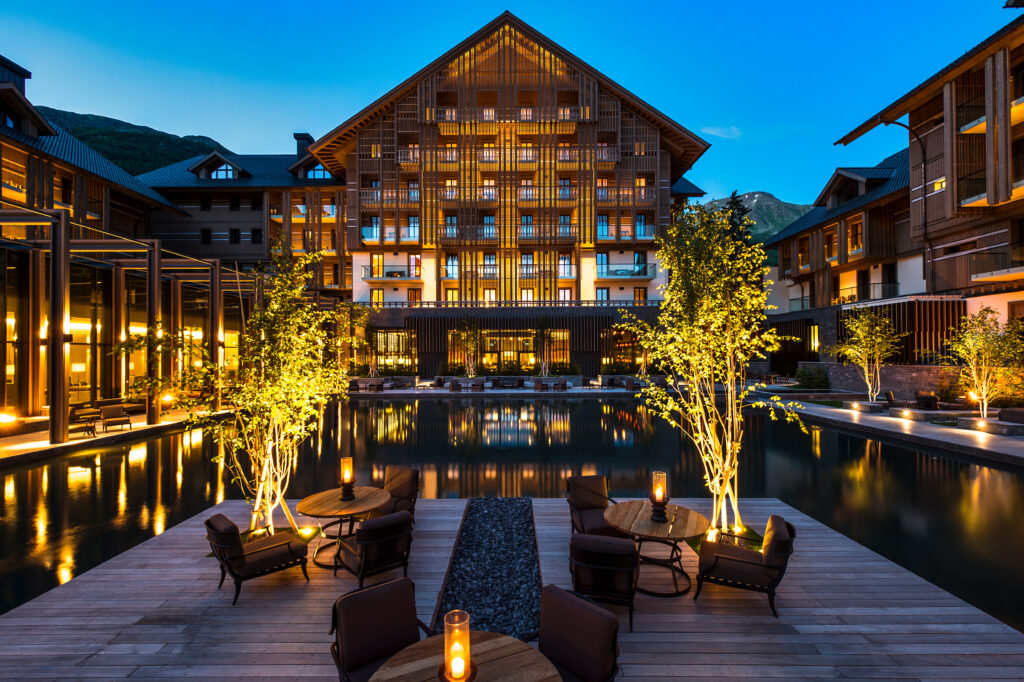
Today, that heritage lives on. Whether it is the old-world glamour of Badrutt’s Palace or the modern Asian-Alpine fusion of The Chedi Andermatt, the Swiss hospitality standard is arguably the highest in the world.

Know Your Regions: A Style Guide
The Swiss Alps are not a monolith; they are a patchwork of cantons, each with its own language, culture, and driving style.
1. Graubünden (The East)
The Vibe: Wild, expansive, and unapologetically glitzy. This is the home of St. Moritz and the jet-set.
The Drive: The roads here are faster and more open. The Julier Pass and Bernina Pass offer sweeping curves rather than tight switchbacks, allowing high-performance GT cars to stretch their legs.
Best For: The “See and Be Seen” crowd.
2. The Bernese Oberland (The Centre-West)
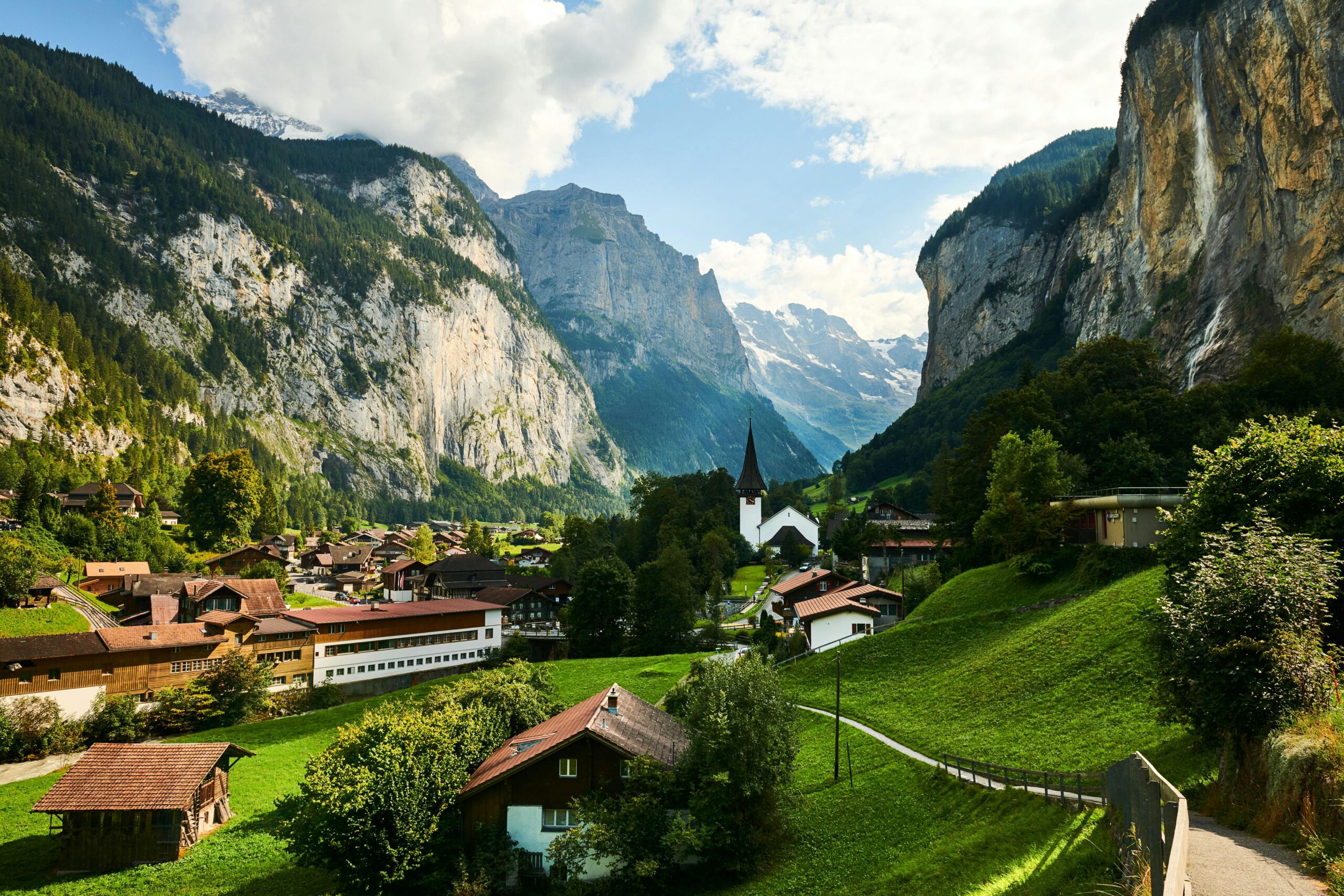
The Vibe: This is “Postcard Switzerland.” Think wooden chalets, cowbells, and the legendary trio of peaks: the Eiger, Mönch, and Jungfrau.
The Drive: While many villages here (like Wengen and Zermatt) are car-free, the valleys leading to them offer spectacular cruising.
Best For: Traditionalists and nature lovers.
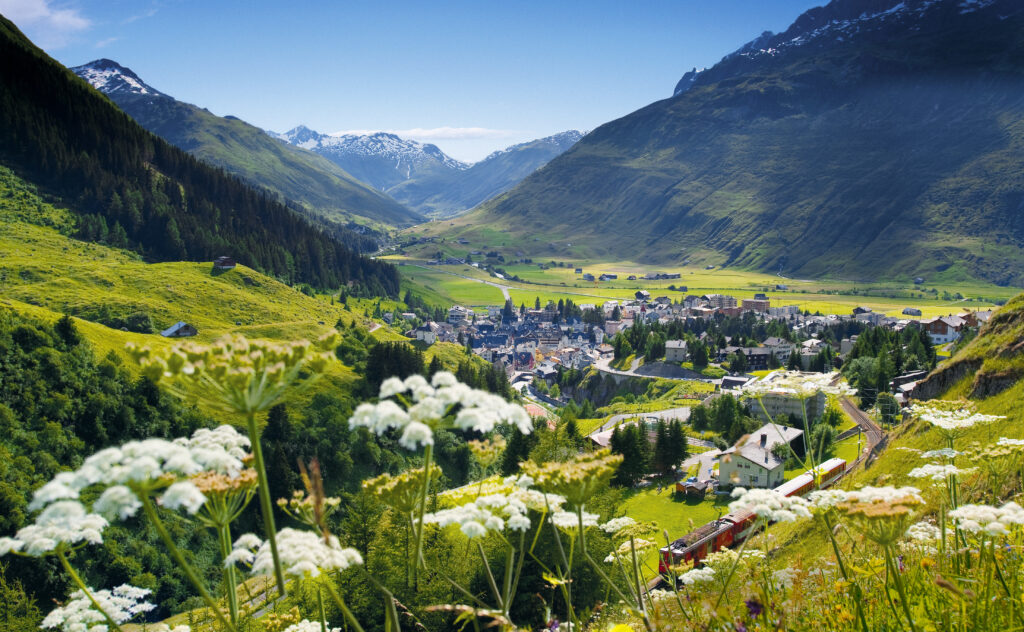
3. The Central Alps (Andermatt & Surrounds)
The Vibe: Rugged granite and serious driving. This is the junction where North meets South.
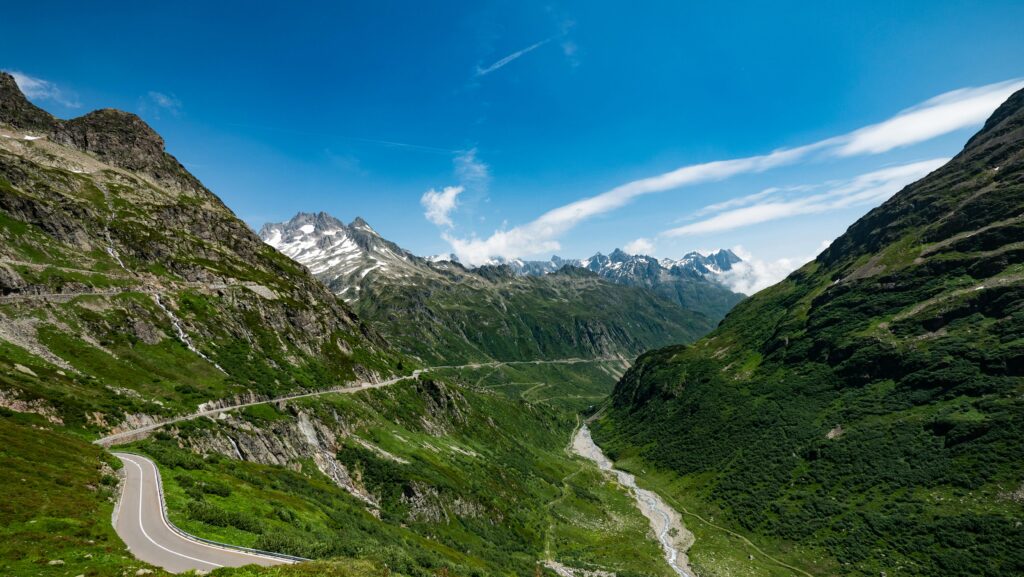
The Drive: This is ground zero for the driving purist. It is home to the “Big Three” passes (Susten, Grimsel, Furka), which form the most famous driving loop in the world.
Best For: Petrolheads.
The Holy Trinity: The Best Driving Roads
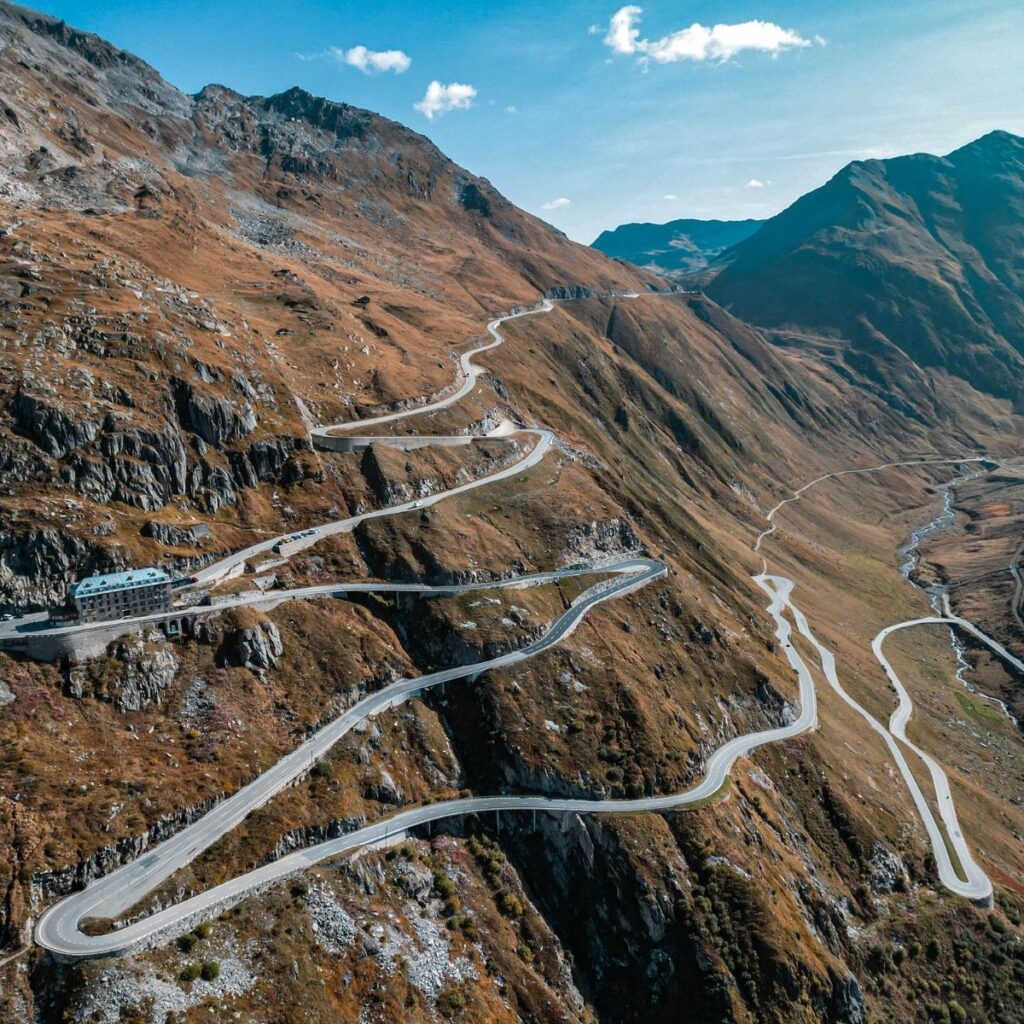
If you only drive three roads in your life, make them these. Conveniently, they can be driven in a single, adrenaline-fuelled loop from Andermatt.
The Susten Pass: Often voted the best driving road in the world. It was built primarily for tourism, meaning it was designed to be driven. It features wide lanes, perfect camber, and 26 bridges and tunnels.
The Grimsel Pass: A darker, more dramatic drive. You climb past hydroelectric dams and reservoirs with water so turquoise it looks artificial. The summit offers a lunar landscape of bare granite.
The Furka Pass: The movie star. It is tighter and more technical than the Susten, with the famous Belvédère Hotel (currently closed) on a hairpin bend offering the ultimate photo opportunity.
FAQ: Planning Your Swiss Adventure
Do I need a Vignette (toll sticker)? Yes. To drive on Swiss motorways, you need a “Vignette” sticker on your windshield (cost: 40 CHF). However, the high mountain passes themselves are toll-free. When you book a tour with Ultimate Drives, your rental car will already have this equipped.
What are the speed limits? Switzerland is strict. The limit is usually 120 km/h on motorways, 80 km/h on open roads (including passes), and 50 km/h in towns. Speed cameras are common, so we advise enjoying the acceleration and handling of the passes rather than chasing top speed.
When do the passes open? This is critical. The high passes (Furka, Grimsel, Susten, Stelvio) are seasonally closed by snow. They typically open in mid-June and close by mid-October. If you travel in May, you will be stuck in the tunnels!
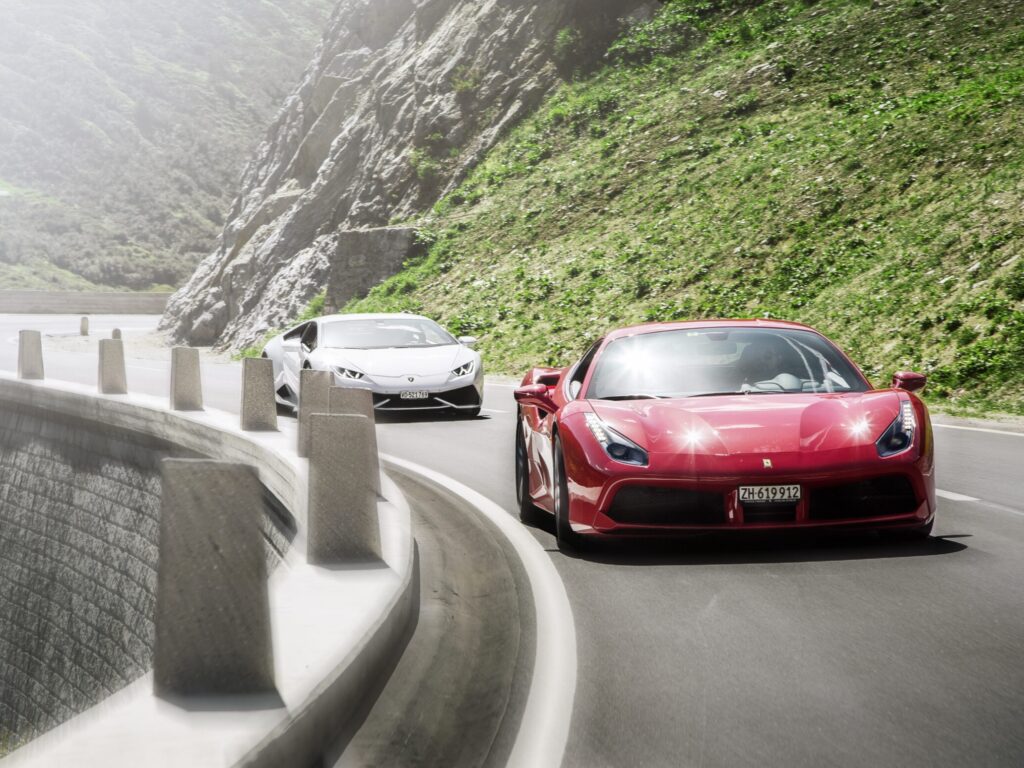
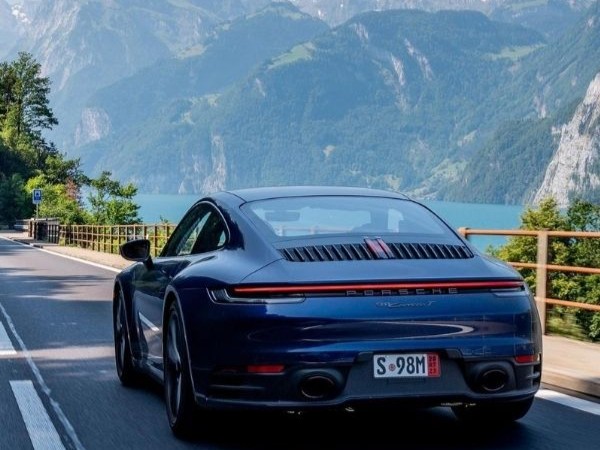
Can I drive a wide supercar (e.g., Lamborghini Aventador)? Yes, but be aware that some passes (like the Grosse Scheidegg or parts of the Furka) are narrow. The Porsche 911 or Ferrari 296 GTB are often the perfect “Swiss weapons”—wide enough for presence, but narrow enough to handle oncoming post buses without stress.
Experience the Legend
The Swiss Alps are not just scenery; they are a feeling. The feeling of cool air on your face as you downshift for a hairpin, the smell of pine forests, and the satisfaction of a day spent conquering the world’s finest roads.
At Ultimate Drives, we have curated the perfect Swiss itineraries:
For the Driver: Tackle the “Big Three” on our Swiss Passes & Andermatt tour.
For the High-Flyer: Combine the drive with world-class luxury on our St. Moritz & Stelvio tour.
For the Explorer: See it all on the Switzerland Grand Tour.
Latest Articles